
Finding Peace: How Women-Focused Rehab Programs Heal PTSD and Addiction
PTSD touches about 1 in 10 women, often alongside substance use, leaving them feeling alone and overwhelmed. This guide explores how specialized residential care for women helps heal trauma through tailored approaches, proven therapies, holistic practices, and a clear path to recovery. We’ll cover what PTSD is, why it affects women differently, how women-centered programs foster healing, the most effective treatments, integrative mind-body techniques, how to get started, and ongoing support. Discover how Sun County Wellness’s program blends medical, psychological, and peer support for lasting well-being. Reach out to learn more about admissions and insurance.
Understanding PTSD and Its Unique Impact on Women
Post-traumatic stress disorder (PTSD) is a mental health condition that can arise after experiencing or witnessing a deeply distressing or life-threatening event. It can change how your brain responds to stress, leading to constant alertness, intrusive memories, and sleep problems that make everyday life a struggle. Recognizing the connection between trauma and brain chemistry is key to addressing symptoms and supporting healing.
Women often experience PTSD differently than men, influenced by factors like hormonal shifts, higher rates of interpersonal violence, and societal expectations. These can intensify avoidance, emotional numbness, and co-occurring mood issues, making gender-specific care essential. Understanding these differences helps us create more effective PTSD treatment for women and design programs that truly resonate with their experiences.
Common Signs of PTSD in Women
The signs of PTSD in women can vary widely, affecting both their emotional and physical well-being. Key indicators include:
- 1Reliving the traumatic event through vivid memories or nightmares.
- 2Avoiding anything that reminds them of the trauma—people, places, or even conversations.
- 3Experiencing negative shifts in thoughts and mood, such as feeling worthless, guilty, or emotionally distant.
- 4Feeling constantly on edge, easily startled, or having trouble concentrating.
- 5Suffering from physical symptoms like headaches, stomach issues, or persistent fatigue tied to stress.
These symptoms can often be mistaken for depression or anxiety, highlighting the need for integrated care that addresses trauma and its widespread effects. Recognizing these patterns shows why specialized treatment for women can significantly improve engagement and recovery.
The Interplay of Trauma and Addiction in Women with PTSD
When PTSD and addiction occur together, it’s often a cycle where women use substances to numb the pain of trauma, but this use can also make them more vulnerable to further trauma and disrupt their natural stress response. Trauma can alter the body’s stress hormones and reward pathways, increasing cravings and dependence. In turn, substance use can worsen PTSD symptoms like avoidance and hypervigilance, creating a loop that standard programs might not break.
Here’s a look at how PTSD and addiction often interact in women survivors:
Trauma-Related Condition
How It Affects the Brain and Body
What Treatment Needs to Address
PTSD
Heightened stress response and difficulty regulating emotions.
Therapy focused on processing trauma to help the body and mind feel safer.
Substance Use Disorder
Changes in the brain’s reward system, leading to cravings and tolerance.
Careful detox and strategies to prevent relapse.
Both conditions can amplify each other, creating intense emotional and physical distress.
Treatment that addresses both PTSD and addiction simultaneously.
By treating PTSD and addiction together in one program, women receive comprehensive care that targets the root causes, paving the way for balanced healing.
Why Are Women More Susceptible to PTSD?
Women are nearly twice as likely as men to develop PTSD. This is often due to higher rates of experiencing certain traumas, like sexual assault and interpersonal violence, as well as biological factors. Societal pressures can also contribute, sometimes making it harder for women to seek help due to feelings of shame. Additionally, changes related to reproductive cycles and the demands of motherhood can intensify stress responses and complicate symptom management.
These realities underscore the importance of gender-specific environments where women feel safe to open up about their experiences, fostering empowerment and reducing isolation. This understanding guides program design, emphasizing peer support, specialized women’s health expertise, and trauma-informed principles.
How Women-Centered Residential Programs Foster Healing from PTSD
Women-focused residential treatment offers a secure, supportive space where staff, therapists, and peers work together toward healing. These programs often include medical detox, psychiatric assessments, and round-the-clock support to stabilize both physical and emotional symptoms. Predictable routines and shared activities build a sense of safety and trust, helping women regain a sense of control and build resilience.
Sun County Wellness’s Women’s Residential PTSD and Addiction Treatment Program uses trauma-informed care to help clients recognize triggers and manage stress. Our team coordinates individual therapy, group sessions, and skill-building workshops to address the cognitive and emotional impacts of trauma. By prioritizing women’s experiences and creating a safe environment free from potential re-traumatization, these programs build a strong foundation for lasting recovery.
The Advantages of Gender-Specific Residential Care for Women
Gender-specific residential rehab provides a unique environment where women can share their struggles without fear of judgment and connect with others who truly understand. Key benefits include:
- A greater sense of emotional safety within all-female groups.
- Specialized programs addressing women’s health concerns and the impact of relational trauma.
- A reduced risk of harassment or triggering interactions.
- Opportunities for programs that support mothers and their children.
- Peer support that validates shared gendered experiences.
These advantages foster a powerful sense of community and mutual empowerment, encouraging deeper engagement in therapy and reducing the likelihood of dropping out. Recognizing these strengths highlights why gender-responsive settings are so effective in trauma recovery.
A Glimpse into a Typical Day in Women’s PTSD Residential Care
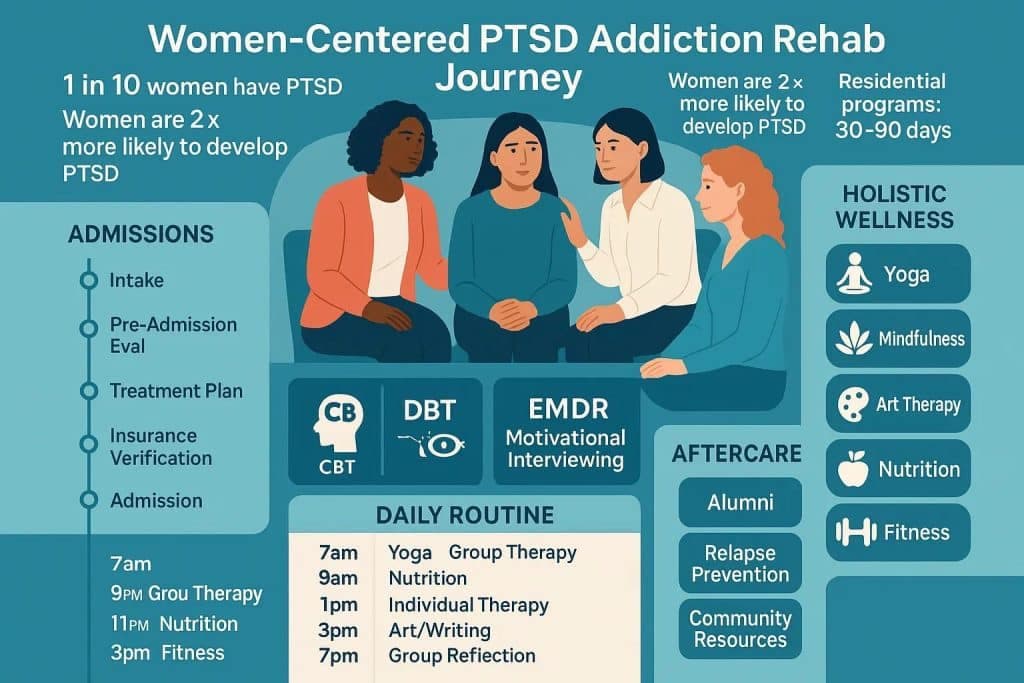
A structured daily schedule balances therapy, self-care, learning, and relaxation to establish healthy habits. A typical day might look like this:
- 7 AM: Gentle yoga and mindfulness meditation to calm the nervous system.
- 9 AM: Group therapy focused on processing trauma using cognitive-behavioral techniques.
- 11 AM: Nutritional guidance and a nourishing meal.
- 1 PM: One-on-one therapy with a specialist in trauma recovery.
- 3 PM: Creative expression through art therapy or writing workshops.
- 5 PM: Fitness class designed to manage stress through movement.
- 7 PM: Group sharing and reflection to build connection and insight.
This consistent rhythm helps create stability, teaches vital coping skills, and strengthens the connection between mind and body. Predictable routines can ease anxiety and support the development of self-regulation skills crucial for life after treatment.
How Trauma-Informed Care Enhances Women’s Healing Journey
Trauma-informed care is a guiding philosophy that emphasizes safety, choice, collaboration, trustworthiness, and empowerment at every step of treatment. It shifts the focus from asking “What’s wrong with you?” to “What happened to you?” By acknowledging how deeply trauma affects the body and mind, interventions aim to heal not just symptoms, but the underlying wounds. Core principles include:
- Screening for past trauma during the intake process.
- Communicating openly to avoid re-traumatizing experiences.
- Empowering clients to have a say in their treatment plan.
- Ensuring all staff are trained in trauma-sensitive approaches.
This approach builds resilience by validating survivors’ experiences, working together to set treatment goals, and equipping women with emotional regulation skills they can use long after they leave.
Effective Therapies for Women’s PTSD and Addiction
Evidence-based therapies offer structured paths to healing by targeting specific PTSD symptoms and the underlying issues of substance use:
Therapy Type
How It Works
What It Helps With
Cognitive Behavioral Therapy (CBT)
Helps identify and change negative thought patterns.
Reduces distressing memories and the urge to avoid triggers.
Dialectical Behavior Therapy (DBT)
Teaches skills for managing intense emotions and difficult situations.
Lowers the risk of self-harm and improves emotional control.
Eye Movement Desensitization and Reprocessing (EMDR)
Uses guided eye movements to help the brain process traumatic memories.
Speeds up healing from trauma and reduces feelings of being constantly on alert.
Motivational Interviewing
Guides individuals to find their own reasons for change.
Increases commitment to recovery and lowers the chance of relapse.
This integrated approach addresses both PTSD and addiction, ensuring that therapies work together to build coping skills for mental health and substance use challenges.
How CBT Supports Women Recovering from PTSD
CBT helps women challenge and change the distorted beliefs that often follow trauma, which can fuel fear and guilt. Through gradual exposure to difficult memories in a safe setting, clients learn that triggers no longer signal danger. This process reshapes negative thinking patterns, reduces avoidance, improves mood, and promotes healthier ways of coping. Many women find they gain a stronger sense of self-efficacy and feel less shame after using CBT to manage intrusive thoughts and self-critical inner dialogue.
The Role of DBT in Healing from Trauma
DBT combines mindfulness with skills for effective communication and managing relationships, which is particularly helpful for emotional instability often seen in PTSD. Women learn techniques to cope with intense anxiety, like focused breathing and grounding exercises, without needing to turn to substances. The interpersonal skills modules teach assertive communication and how to set healthy boundaries, counteracting the effects of relational trauma. By mastering these skills, survivors gain better control over their emotional responses and build healthier connections.
Why EMDR is Particularly Helpful for Female Trauma Survivors
EMDR works by tapping into the brain’s natural ability to process information, helping to reprocess distressing memories. For many women, trauma is stored in fragmented ways, leading to ongoing distress. Bilateral stimulation—like guided eye movements—helps the brain integrate these fragments, lessening the power of traumatic memories. This method can quickly relieve intrusive symptoms, offering a powerful complement to traditional talk therapy in residential settings.
How Group and Individual Therapy Work Together for Women in Rehab
Individual therapy offers a private space to delve into personal trauma history and develop tailored coping strategies. Group therapy, on the other hand, builds connection, normalizes experiences, and provides peer encouragement. Combining both allows women to refine skills in private sessions and then practice them in a supportive group setting. This synergy speeds up the process of building trust, reduces feelings of isolation, and reinforces therapeutic insights through shared feedback and practice.
Holistic Wellness Practices for Women’s PTSD Recovery

Holistic approaches engage both the mind and body, building resilience beyond just managing symptoms. Practices like yoga, mindfulness, art therapy, nutritional counseling, and fitness help regulate the nervous system, reduce stress hormones, and strengthen brain pathways associated with well-being. By incorporating these methods into residential care, programs address the complete healing needs of women—from physical health to creative expression and finding inner peace.
How Yoga and Mindfulness Support Trauma Healing in Women
Yoga and mindfulness cultivate an awareness of the present moment and help reduce hyper-vigilance by calming the body’s stress response. Focused breathing and gentle movements can release physical tension often held due to trauma. Mindfulness meditation teaches survivors to observe difficult thoughts without getting carried away by them, lessening their emotional impact. Regular practice can lead to lasting changes in the brain that support emotional stability and a stronger mind-body connection, aiding overall healing.
The Value of Art Therapy and Spiritual Support in Women’s Recovery
Art therapy provides a way to express trauma experiences without relying solely on words, helping to unlock deeper feelings and insights. Through visual arts, music, or movement, women can explore their identity, reclaim their sense of self, and process grief in creative ways. Spiritual care—which can include guided reflection, nature activities, or meditation—helps clients reconnect with their sense of purpose, counteracting feelings of emptiness or despair. Combining expressive and spiritual practices can deepen emotional release and self-understanding.
How Nutrition and Fitness Boost Mental Health Recovery for Women
Good nutrition and regular exercise are fundamental for balancing brain chemistry and building resilience to stress. Diets rich in omega-3 fatty acids, B vitamins, and antioxidants support the production of mood-regulating neurotransmitters and reduce inflammation linked to PTSD. Physical activity releases endorphins, improves mood, and enhances cognitive function. Structured exercise, like Pilates or cardio, also helps establish routine, build self-esteem, and create a sense of accomplishment that supports overall recovery.
Accessing PTSD and Addiction Treatment: Admissions, Insurance, and Financial Aid
Getting into residential PTSD treatment involves clear steps to make the process smooth and ensure your insurance is utilized effectively. Sun County Wellness offers a straightforward admissions process, a dedicated insurance team, and financial counselors to guide you. Starting treatment sooner rather than later helps maintain momentum in your healing journey.
Your Step-by-Step Guide to Admissions for Women’s Residential Rehab
Our admissions process is designed to be clear and supportive, with five key stages:
- 1Initial contact with our intake team to discuss your situation and goals.
- 2A pre-admission assessment, including medical and psychiatric evaluations, and substance use screening.
- 3A personalized treatment plan developed with our clinical team.
- 4Verification of your insurance benefits and a discussion of financial options.
- 5Confirmation of your admission date and an introduction to our program and facilities.
This structured approach ensures you have all the information you need to begin your healing journey with confidence.
Navigating Insurance Verification for Women’s PTSD Treatment
We work closely with your insurance provider to confirm coverage for residential mental health and addiction services. Our clinical team collaborates with your insurance company to obtain pre-authorization for necessary care, including detox, therapy sessions, and other services. We’ll provide clear information about deductibles, co-payments, and out-of-pocket expenses to help you plan financially and make the most of your benefits.
Financial Support Options for Women Seeking Rehab
If insurance doesn’t cover the full cost, several financial options may be available:
- Sliding-scale fees based on your income.
- Flexible payment plans to spread costs over time.
- Grants from government or non-profit organizations.
- Support from family members.
- Scholarship opportunities offered directly by our center.
Our financial counselors can help you explore and apply for these options, ensuring that cost is not a barrier to receiving the care you need.
Sustaining Recovery: Long-Term Support and Aftercare for Women
After completing residential treatment, ongoing support is vital for maintaining progress and preventing relapse. Sun County Wellness provides a range of aftercare services, including alumni networks, relapse prevention coaching, and connections to community resources. Staying connected to support systems helps build resilience and reduces feelings of isolation as you transition back into daily life.
How Alumni Programs Support Women Post-Treatment
Our alumni programs bring together former participants for regular gatherings, peer-led support groups, and mentorship opportunities. These networks foster accountability, encourage continued goal-setting, and provide a space to share successes and challenges. Alumni often lead workshops on coping skills and healthy living, reinforcing program principles and creating a lasting community.
Effective Relapse Prevention Strategies for Women with PTSD and Addiction
Successful relapse prevention involves self-awareness, a toolkit of coping strategies, and consistent structure. Key approaches include:
- Creating a personalized plan to recognize early warning signs.
- Participating in regular therapy check-ins and support groups.
- Practicing stress-management techniques like deep breathing and progressive muscle relaxation.
- Maintaining a healthy lifestyle with balanced nutrition, good sleep habits, and regular exercise.
- Building a strong network of sober support for ongoing encouragement.
Integrating these strategies into daily life strengthens your recovery and reduces the risk of returning to harmful patterns.
Community Resources for Women’s Mental Health Aftercare
Women can find valuable support in their communities:
- Local peer-led support groups for trauma survivors.
- Mental health clinics offering affordable counseling services.
- Faith-based or volunteer organizations that provide social connection.
- Online communities moderated by mental health professionals.
- Wellness workshops focusing on nutrition, yoga, or creative arts.
Connecting with these resources helps bridge the gap between formal treatment and everyday life, sustaining the progress made during residential care.
Frequently Asked Questions About Women’s PTSD and Addiction Treatment
What Is the Most Effective Treatment for PTSD in Women?
The most effective approach for women with PTSD combines trauma-informed care with evidence-based therapies like CBT, DBT, and EMDR, alongside peer support and holistic practices. This comprehensive strategy helps regulate stress responses, process traumatic memories, and build essential coping skills, leading to significant symptom improvement and a greater sense of empowerment.
How Do Women’s Trauma Programs Differ from Co-Ed Programs?
Women’s trauma programs are designed with gender-specific needs in mind, offering all-female therapy groups, education tailored to women’s health, and peer mentorship that addresses unique relational and societal challenges. This focused environment minimizes the risk of re-traumatization and encourages open discussion of sensitive topics, such as reproductive health or experiences of violence, leading to better engagement and outcomes.
Can PTSD Be Fully Cured Through Rehab?
While PTSD may not be “cured” in the traditional sense, rehab can dramatically reduce symptoms, restore daily functioning, and build lasting resilience. Women learn effective tools to manage intrusive memories and regulate emotions, enabling them to lead stable and fulfilling lives. Ongoing support and consistent practice of coping strategies are key to maintaining progress.
How Long Does Residential PTSD Treatment for Women Typically Last?
Residential PTSD treatment programs usually range from 30 to 90 days, depending on the individual’s needs, co-occurring conditions, and progress. Shorter stays often focus on immediate stabilization, while longer programs allow for deeper trauma processing, skill development, and comprehensive relapse prevention planning.
What Are the Signs a Woman Needs Trauma and Addiction Treatment?
Early signs that indicate a need for specialized care include:
- Persistent nightmares or flashbacks that interfere with daily life.
- Increasing reliance on substances to cope with stress or difficult emotions.
- Withdrawal from social or work responsibilities.
- Significant mood swings, irritability, or deep sadness.
- Unexplained physical symptoms like chronic pain or digestive issues.
Recognizing these signs and seeking specialized treatment can prevent further challenges and support recovery from both PTSD and addiction.
Healing from PTSD and addiction in a women-focused residential setting addresses the full impact of trauma through gender-responsive, trauma-informed, and evidence-based methods. By integrating individual therapy, group support, holistic wellness, a clear admissions process, insurance coordination, and aftercare networks, women gain the tools necessary for enduring recovery. If you or someone you know is ready to start this journey, contact Sun County Wellness’s admissions team to verify insurance and explore financial support options.