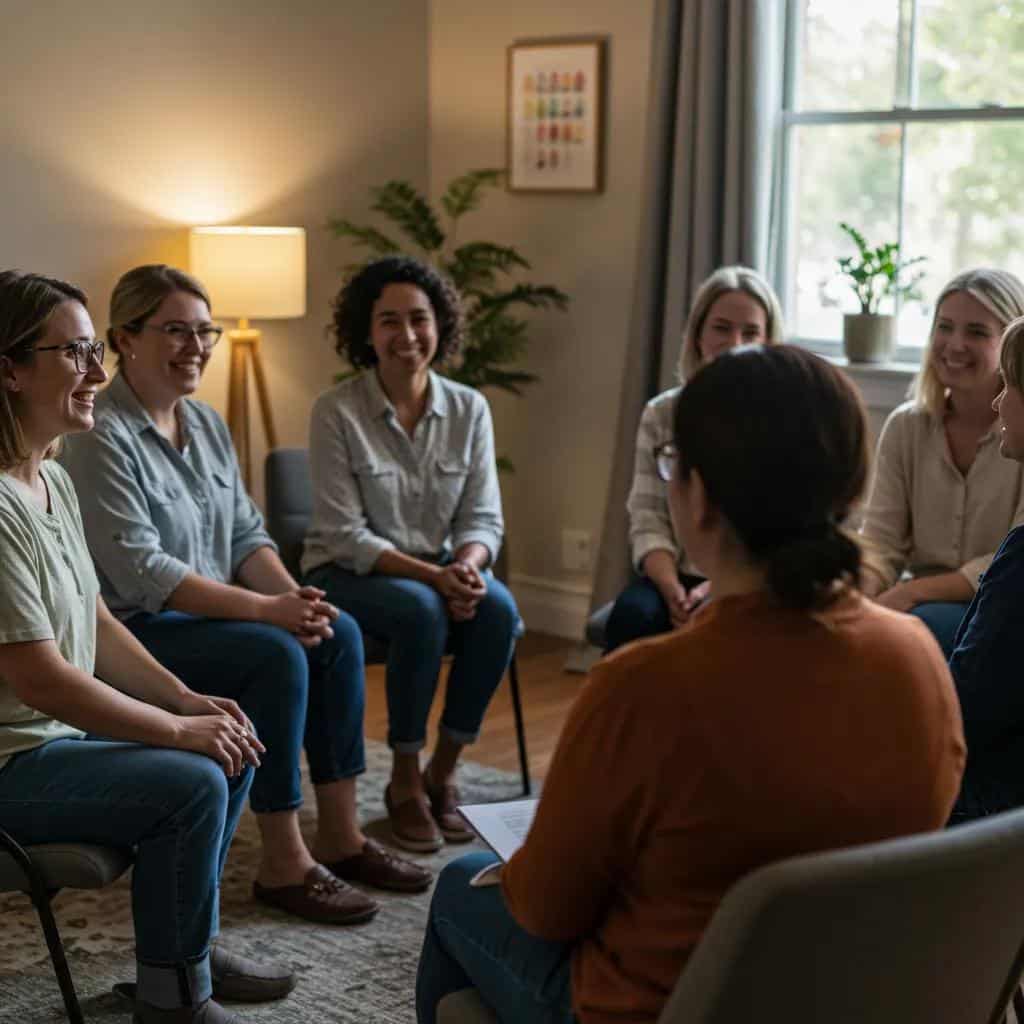

Clinically Reviewed By Brittany Astrom - LMFT
Brittany has 15 years of experience in the Mental Health and Substance Abuse field. Brittany has been licensed for almost 8 years and has worked in various settings throughout her career, including inpatient psychiatric treatment, outpatient, residential treatment center, PHP and IOP settings.
Women’s Group Therapy: Finding Connection, Building Skills, and Achieving Lasting Recovery
Women’s group therapy offers a unique space where individuals can connect over shared experiences, practice vital therapeutic skills, and significantly improve their mental health and addiction recovery journeys through structured, peer-based support. This article will guide you through what women’s group therapy truly is, why a gender-specific setting can make all the difference, and how evidence-based approaches like CBT and DBT, combined with trauma-informed and holistic care, work to reduce symptoms, prevent relapse, and strengthen your coping abilities.
We understand that many women seeking treatment face unique challenges, such as caregiving responsibilities, societal stigma, and co-occurring trauma; group therapy thoughtfully addresses these through social learning, shared accountability, and targeted skills training that seamlessly integrates into daily life.
You’ll explore the core benefits, understand how trauma-informed principles are woven into our care, discover which modalities fit different program levels (PHP/IOP/OP), learn about virtual group therapy options, and get practical insights into admissions and insurance. Throughout this guide, we integrate current research and real-world examples to help you evaluate your options, prepare for participation, and envision your path to recovery within a supportive, gender-specific group setting.
Discover the Key Benefits of Women’s Group Therapy
Women’s group therapy provides tangible and meaningful benefits by blending powerful peer support, expert-guided skills training, and structured relapse-prevention strategies. Together, these elements work to reduce feelings of isolation and accelerate your recovery journey. The magic happens through social learning—observing others, receiving constructive feedback, and repeatedly practicing new skills—which builds confidence, reduces shame, and fosters deeper engagement than many individual therapies.
Group settings also offer an efficient way to deliver proven techniques like CBT and DBT, while giving women a safe, supportive space to practice interpersonal skills. Understanding these core advantages can help you make informed choices about the right modality and intensity for your needs, whether you’re seeking support for mood, anxiety, trauma-related symptoms, or substance use concerns.
Our women’s groups focus on delivering benefits across three vital areas:
- 1Empowering Social Support & Connection: Peer validation helps normalize your experiences and significantly reduces self-stigma.
- 2Practical Skill Building & Real-World Application: Practicing DBT/CBT skills empowers you with better emotion regulation and healthier thought patterns.
- 3Stronger Relapse Prevention & Accountability: Group-based planning and check-ins boost your commitment to recovery goals.
These benefits unfold through distinct processes, leading to observable improvements like a brighter mood, fewer substance-use episodes, and greater treatment engagement. Let’s explore next how our groups actively cultivate connection and community for women.
How Group Therapy Cultivates Connection and Community Among Women
Group therapy intentionally builds connection through structured sharing, mutual feedback, and facilitator-guided exercises that always prioritize safety and empathetic listening. Sessions often begin with brief check-ins and shared agreements, creating predictable boundaries that ease anxiety and allow for gradual, comfortable sharing, which deepens trust over time. Through social learning, participants observe peers modeling healthy coping strategies, and corrective interpersonal experiences can gently heal past relational wounds by providing consistent, validating feedback. These powerful dynamics naturally foster a strong sense of community and peer-led accountability, encouraging greater participation and skill practice both during and between sessions.
Building this profound connection is a deliberate process that truly sets the stage for targeted skill development. In the next section, we’ll outline the essential coping skills women typically gain in our group settings and how they are put into practice.
Essential Coping Skills Women Develop in Group Therapy
Women’s group therapy at Sun County Wellness focuses on practical, actionable skills designed to enhance emotion regulation, improve interpersonal functioning, and strengthen relapse prevention. This is achieved through active practice and supportive homework between sessions.
Key skill areas often include DBT-based techniques for managing emotions and tolerating distress, CBT strategies for reframing thoughts and boosting positive behaviors, assertive communication and boundary-setting, and concrete relapse-prevention planning tailored to your unique triggers and social environments. Our groups utilize role-plays, modeling, and small peer-led exercises, allowing participants to repeatedly apply these skills in real-time, which significantly accelerates their integration into daily life. Mastering these competencies leads to improved daily functioning, fewer crisis moments, and healthier, stronger relationships outside of therapy.
These vital skills are part of a broader trauma-informed approach that many of our programs prioritize. This ensures we avoid re-traumatization and enhance your engagement. Our next section will explain how trauma-informed care is thoughtfully integrated into women’s group therapy.
Integrating Trauma-Informed Care into Women’s Group Therapy
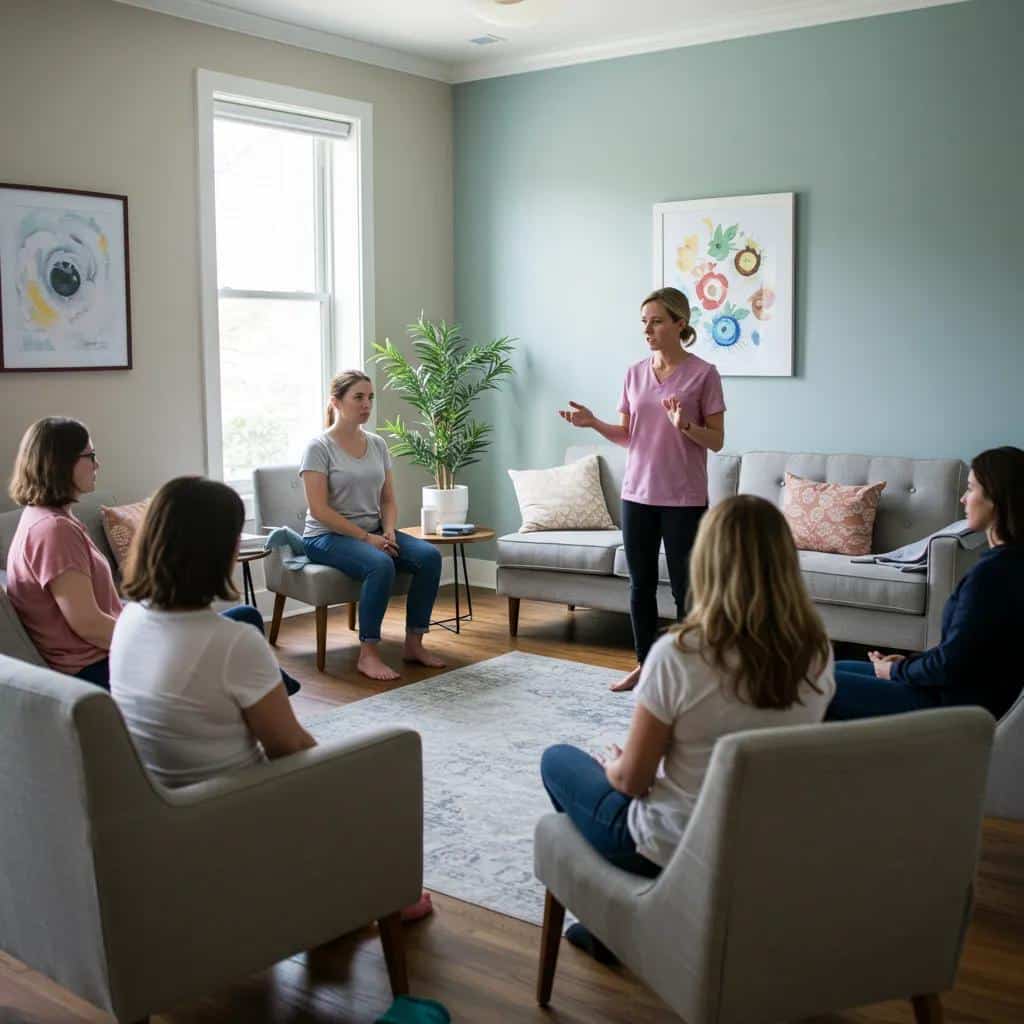
Trauma-informed care in women’s group therapy is at the heart of every decision we make—from group composition and pacing to consent and facilitator responses. We firmly anchor our approach in principles of safety, trustworthiness, choice, collaboration, and empowerment. This commitment helps reduce the risk of re-traumatization and significantly improves your recovery outcomes.
Practically, our trauma-informed groups minimize the chance of overwhelming experiences by using predictable structures, providing content warnings, and offering optional sharing practices. This empowers participants with a sense of control while still enabling deep therapeutic processing. Our facilitators receive specialized training in trauma responsiveness, and sessions thoughtfully incorporate grounding and stabilization exercises before any potentially sensitive content, ensuring that symptom reduction and skill-building remain our primary focus. Integrating these trauma-informed features boosts retention, allows for more accurate clinical assessment, and creates a safe foundation for trauma-related work when you feel sufficiently stable and ready.
Here’s a concise summary of the trauma-informed principles we thoughtfully embed in our women’s group work:
- Safety: We create predictable session structures and ensure physical/virtual privacy safeguards.
- Choice: We offer optional sharing and diverse participation formats to honor your comfort level.
- Collaboration: We work together to develop group agreements and deeply respect your agency.
- Empowerment: Our focus is on building your strengths, developing new skills, and fostering self-efficacy.
These guiding principles then inform the specific clinical practices we use, which we’ll describe in the next section, explaining why trauma-informed approaches are so crucial for women in mental health and addiction treatment.
Why Trauma-Informed Therapy is Essential for Women’s Mental Health and Addiction Recovery
Trauma-informed therapy is absolutely essential because women seeking mental health and substance-use treatment often have disproportionately high rates of past interpersonal trauma and co-occurring PTSD. Untreated trauma can frequently undermine engagement and significantly increase the risk of relapse. By deeply understanding trauma’s prevalence and its physiological impact, our providers can thoughtfully tailor pacing and interventions to prioritize your stabilization, which enhances safety and allows skills-based work to truly take hold.
Research and guidance from leading public health authorities consistently highlight the importance of trauma-aware service design for improving retention and clinical outcomes. Groups that embrace these practices create environments where women feel less judged, more understood, and more likely to bravely experiment with new coping strategies. The next section will detail the actionable features that make our trauma-informed group sessions effective and safe for women.
Unique Features of Trauma-Informed Group Sessions for Women
Our trauma-informed group sessions for women are designed with explicit safety agreements, calming pre-session grounding routines, and flexible participation options. This approach minimizes the risk of re-traumatization while actively promoting your empowerment. Facilitators begin each meeting with predictable check-ins and clear content warnings, and they provide brief stabilization tools—like breathing exercises, orientation prompts, and self-soothing techniques—before any deeper discussions.
Our groups also implement individualized safety planning and strongly emphasize consent when approaching traumatic material, allowing members to step back or process privately when needed. These thoughtful design choices enhance participation and create a secure therapeutic container that supports deeper trauma processing or exposure work when it is clinically appropriate and you feel ready.
This trauma-informed design beautifully complements specific therapy modalities—CBT, DBT, process, and psychoeducational groups—which we’ll explore next and map to various program levels like PHP, IOP, and OP.
Exploring Women’s Group Therapy Programs: Your Options
Women’s group therapy is offered in several powerful modalities—including CBT groups, DBT skills groups, trauma-focused groups, process-oriented groups, and psychoeducational formats. Each is carefully suited to different clinical goals and intensity levels, from Partial Hospitalization Programs (PHP) to Outpatient Programs (OP). Your modality selection will depend on your symptom severity, your need for daily structure, and your personal goals, whether they involve acute stabilization, skill acquisition, or long-term relapse prevention.
Partial Hospitalization Programs (PHP) provide day-level structure and are ideal for higher-acuity needs; Intensive Outpatient Programs (IOP) combine multiple weekly group sessions with essential outpatient supports; and Outpatient Programs (OP) offer ongoing maintenance and relapse-prevention groups. Mapping the modality to the setting clarifies expectations for frequency and therapeutic focus, empowering you to choose the level that best aligns with your clinical needs and life circumstances.
Below, you’ll find a practical overview of common group modalities, their typical program settings, and the core skills each emphasizes.
Modality
Typical Setting (PHP/IOP/OP/Virtual)
Core Focus/Skills
CBT Group Therapy for Women
IOP / OP / Virtual
Cognitive restructuring, behavioral activation, identifying relapse triggers
DBT Group Therapy for Women
PHP / IOP / Virtual
Mindfulness, distress tolerance, emotional regulation, interpersonal effectiveness
Trauma-Informed Women’s Group Therapy
PHP / IOP / OP
Stabilization, safety planning, paced trauma processing
Process-Oriented / Psychoeducational Groups
IOP / OP / Virtual
Exploring interpersonal dynamics; structured recovery education and skills practice
This helpful mapping assists both clinicians and participants in choosing the ideal combination of intensity and modality to support your individual recovery goals. In the next sections, we’ll delve deeper into how CBT and DBT groups operate, along with other valuable modalities available for women.
How CBT and DBT Group Therapies Empower Women’s Recovery
CBT and DBT groups offer powerful, complementary approaches to support your recovery. CBT specifically targets unhelpful thoughts and behaviors to reduce symptoms of depression and anxiety, while DBT teaches concrete skills for emotion regulation and distress tolerance, directly addressing impulsive behaviors and relapse triggers.
A typical session structure includes a brief check-in, focused skills teaching, role-play or behavioral rehearsal, and collaborative homework planning, so you can confidently test new strategies between meetings. In these supportive group settings, members witness peers effectively using techniques, which significantly boosts motivation and accelerates skill adoption through modeling and valuable feedback. This powerful synergy makes combined CBT/DBT curricula especially effective for women navigating mood disorders, trauma-related symptoms, and co-occurring substance use challenges.
Understanding the variety of modalities helps clarify other group formats available. The following section outlines these additional options and highlights who benefits most from them.
Other Group Therapy Modalities Offered for Women
Beyond CBT and DBT, our women’s programs often feature a range of other valuable group modalities. These include process-oriented groups (which focus on exploring interpersonal dynamics), psychoeducational groups (offering structured curriculum on illness and recovery), relapse-prevention groups (providing practical planning for high-risk situations), and peer support sessions that foster long-term recovery.
Process groups help participants explore “here-and-now” relational patterns—like avoidance, enmeshment, or boundary challenges—as they unfold in-session, fostering deep insight and corrective experiences. Psychoeducational groups, in contrast, emphasize structured learning on topics such as stress management, parenting skills, nutrition, or sleep hygiene, with practice exercises and homework to solidify new knowledge. Relapse-prevention groups focus on identifying triggers, building coping hierarchies, and creating actionable plans, while peer support groups provide ongoing accountability and a strong sense of community. Different modalities can be thoughtfully combined across program levels to address both acute symptoms and build lasting resilience.
Understanding Process-Oriented and Psychoeducational Groups
Process-oriented groups prioritize live, in-the-moment interpersonal interaction, exploring patterns like avoidance, enmeshment, or boundary violations as they emerge within the session. This fosters profound insight and corrective relational experiences. Psychoeducational groups, on the other hand, emphasize structured learning—offering modules on topics such as emotion regulation, relapse triggers, nutrition, or sleep hygiene—complete with practice exercises and homework to consolidate learning. Both formats play complementary roles: process groups facilitate deeper relational change, while psychoeducational groups provide actionable knowledge and practical skills for daily life. Your choice between them depends on your treatment goals: are you seeking insight and relational repair, or focused skill acquisition and knowledge building?
The convenient availability of virtual delivery significantly expands access to these valuable modalities, which our next section will cover in depth.
How Virtual Women’s Group Therapy Works and Its Benefits

Virtual women’s group therapy thoughtfully mirrors the structure of in-person sessions—featuring scheduled check-ins, skills teaching, and facilitator-led exercises—while adding incredible accessibility benefits. These include reduced transportation barriers, flexible scheduling, and vital continuity during life disruptions. Our effective virtual groups utilize secure video platforms with robust privacy controls, explicit confidentiality agreements, and comprehensive orientation sessions to set clear expectations for camera use, breakout rooms, and emergency plans.
We employ engaging strategies like shorter segments, interactive polls, and breakout role-plays to maintain attention, and our facilitators carefully monitor for distress, using private chat or follow-up calls when needed. These practices uphold therapeutic integrity while significantly increasing reach for women managing caregiving duties, mobility constraints, or geographic limitations.
Virtual delivery also ensures consistent participation during life transitions, such as relocation or unexpected weather challenges. Many women report a greater willingness to attend when childcare or travel barriers are removed. The following section will further explain the accessibility and evidence supporting the effectiveness of virtual group therapy.
Why Virtual Group Therapy is So Accessible and Effective for Women
Virtual group therapy is uniquely accessible for women balancing caregiving responsibilities, demanding work schedules, or transportation challenges. It completely eliminates commute time and allows for participation from the comfort and privacy of home or other secure settings. Research and clinical reports through 2025 consistently show that group-based telehealth can achieve comparable symptom reduction to in-person formats, especially when platforms prioritize privacy and sessions are thoughtfully structured for engagement. Strategies that boost effectiveness include pre-session tech checks, clear orientation to group norms, and explicit safety planning for any crises. This enhanced accessibility supports vital continuity of care and enables consistent skill practice, directly contributing to better outcomes and sustained recovery.
How Women Can Join Online Mental Health and Addiction Support Groups
Joining an online women’s group is a straightforward process designed to ensure your privacy, readiness, and clear expectations before your first session. First, you’ll complete an intake or referral so our clinicians can assess clinical appropriateness and recommend the correct group level. Second, you’ll attend a scheduled orientation that covers confidentiality, camera/microphone etiquette, and safety plans. Third, we’ll guide you through a technical check and help you secure a private space for your sessions. Finally, we encourage a commitment to brief between-session practice and check-ins to reinforce your new skills. Our facilitators always provide written group agreements and emergency contact protocols during orientation, so you’ll know exactly how to seek help if distress arises.
This practical onboarding process significantly reduces barriers to engagement. Please note that Sun County Wellness proudly offers virtual women’s group therapy options and provides a step-by-step orientation and verification process to help women join groups safely and securely.
What Outcomes Can Women Expect from Group Therapy at Sun County Wellness?
Women who participate in our structured group therapy programs typically experience significant symptom reductions in depression and anxiety, improved emotion regulation, and lower relapse rates for substance use. These positive outcomes are consistently observed when groups are delivered with evidence-based curricula and our compassionate, trauma-informed approach. These improvements stem from powerful mechanisms like skill acquisition, sustained peer support, and enhanced treatment adherence. Our program-level monitoring consistently shows gains in coping abilities, social functioning, and decreased crisis utilization when groups are thoughtfully integrated into a comprehensive care plan.
Gender-specific group formats often lead to higher engagement and retention among women, enabling deeper work on trauma and relational patterns that are crucial for long-term recovery. These typical outcomes help set clear expectations for the duration and intensity needed to solidify your gains.
Here’s a concise, outcome-oriented list summarizing the improvements you can expect:
- 1Reduced Symptom Severity: Experience measurable decreases in depression, anxiety, and craving scores.
- 2Improved Coping Skills: Develop better use of emotion-regulation and relapse-prevention strategies.
- 3Greater Social Functioning: Build stronger relationships and community supports that sustain your recovery.
Sun County Wellness thoughtfully combines gender-specific group programming with integrated clinical services and welcomes your benefit verification inquiries. If you’re interested in program placement or quick insurance verification, please don’t hesitate to contact our admissions team by phone to discuss our PHP, IOP, or OP group options and your next steps.
How Group Therapy Enhances Mental Health and Addiction Recovery Outcomes
Group therapy significantly improves outcomes through repeated skills practice, positive social reinforcement, and structured accountability. Participants receive valuable corrective feedback, observe adaptive behaviors modeled by peers, and rehearse relapse-prevention plans within a supportive, understanding context. These powerful interactions foster durable behavioral changes because new skills are applied and reinforced in interpersonal settings that closely mirror real-world challenges. Measurable effects include improved adherence to coping plans, reduced emergency visits, and increased days abstinent for those with substance-use disorders, especially when groups are sustained over time. The next section will summarize the compelling evidence supporting the advantages of gender-specific groups and their implications for choosing the right program.
Evidence Supporting the Effectiveness of Gender-Specific Group Therapy
Current research and leading authorities in behavioral health consistently indicate that gender-specific treatment settings often lead to improved engagement and retention for women. This is particularly true when trauma-informed care and dual-diagnosis integration are central to the program. Studies and public health guidance emphasize that women may disclose their experiences differently and often respond better to gender-tailored content that specifically addresses interpersonal trauma, caregiving stress, and relationship dynamics.
Programs that thoughtfully pair CBT/DBT group curricula with trauma-informed facilitation demonstrate improved outcomes in mood, overall functioning, and relapse reduction compared with non-tailored formats. These compelling findings strongly support choosing women-focused group therapy when a history of trauma, parenting responsibilities, or gender-specific social stressors are key to your treatment goals.
For those seeking services, Sun County Wellness offers gender-specific group programming seamlessly embedded within our PHP, IOP, and OP levels, complete with integrated dual-diagnosis care and trauma-informed facilitation. Interested individuals are encouraged to inquire about admissions and insurance verification by contacting our dedicated admissions line for program details and next steps.
Admissions and Insurance for Women’s Group Therapy Programs
Admissions for women’s group therapy at Sun County Wellness typically follow a clear, supportive sequence: an initial inquiry and screening, a thorough clinical assessment, a personalized level-of-care recommendation (PHP/IOP/OP), and a comprehensive orientation or intake that covers group rules and safety planning. Insurance verification is often performed early in the process to determine your covered services and any potential out-of-pocket costs. Having your member ID, diagnosis codes (if available), and authorization requirements ready will significantly speed up this process.
Many providers—including the women’s programs discussed here—partner with major insurers to streamline benefit checks and authorize appropriate levels of care. Our clear steps and thorough documentation are designed to reduce administrative friction, ensuring your clinical placement can proceed promptly and safely.
Below is a step-by-step admissions flow, followed by a table summarizing common insurers and typical coverage examples to simplify your benefit verification.
- 1Initial Contact and Screening: Share your basic clinical history so we can determine your immediate needs and suitability for group care.
- 2Clinical Assessment: A licensed clinician will evaluate your symptoms, trauma history, and substance-use severity to recommend the most appropriate PHP, IOP, or OP level.
- 3Insurance Verification: We’ll check your benefits and request any necessary authorizations. Please have your member ID and recent clinical notes ready.
- 4Placement and Orientation: You’ll receive your assigned group schedule, safety planning details, and an introduction to your facilitator. Attend orientation before your first session.
Insurer
Coverage Type
Typical Verified Services
Aetna
Behavioral health benefits
IOP/PHP group therapy sessions, initial assessment
Anthem
Mental health and SUD coverage
Group therapy, outpatient services, prior authorization as needed
Blue Cross Blue Shield
Varies by plan
CBT/DBT group coverage and outpatient group visits
Cigna
Behavioral health networks
Group therapy sessions and case management services
GEHA
Health benefits
Outpatient group therapy and coordination of care
Humana
Behavioral health plans
IOP/OP group services with pre-authorization when required
Magellan
Managed behavioral health
Authorization for specialty programs and group services
UMR
Administrative services
Group therapy coverage subject to plan benefits
Please remember, this insurer table provides examples only; your specific coverage will vary by plan and always requires direct verification. To expedite this process, please have your insurer ID, diagnosis, and preferred program level available when you contact our admissions team.
Your Step-by-Step Admissions Process for Women’s Group Therapy
Our practical admissions timeline typically spans a few days to a couple of weeks, depending on your assessment needs and insurance authorization. For urgent needs, initial screening often happens within 24–72 hours. After screening, a comprehensive assessment clarifies your diagnosis and safety needs, leading to a personalized level-of-care recommendation. Once your benefits are confirmed and any necessary authorizations secured, an orientation will schedule your first group sessions and outline all safety protocols. We ensure clear expectations and thorough documentation at each step to facilitate timely placement and minimize any delays.
Which Insurance Providers Cover Women’s Group Therapy at Sun County Wellness?
Sun County Wellness proudly partners with a range of major insurance providers to help eligible women access our group-based mental health and addiction services. We offer quick benefit verification through our admissions team to confirm your plan-specific coverage. Examples of insurers commonly associated with program acceptance include Aetna, Anthem, Blue Cross Blue Shield, Cigna, GEHA, Humana, Magellan, and UMR. Please note that coverage ultimately depends on your individual plan and any prior authorization rules.
When seeking verification, please prepare your member ID, any recent clinical notes, and your preferred program level (PHP/IOP/OP) so our admissions team can provide you with an accurate benefits estimate and guide you through the next steps for scheduling. If you need any assistance, please contact our admissions team by phone to request a benefits check and to discuss suitable group placements.
This article has thoughtfully outlined the core mechanisms, diverse modalities, essential trauma-informed features, convenient virtual delivery practices, expected outcomes, and practical admissions steps for women’s group therapy. Our goal is to empower you with the information needed to make informed decisions about seeking gender-specific group care that truly supports your healing journey.
Frequently Asked Questions About Women's Group Therapy
What can I expect during my very first women’s group therapy session?
During your first women’s group therapy session, you can anticipate a warm and structured environment designed for comfort. The facilitator will likely begin with introductions and a brief overview of the group’s purpose and foundational rules. Participants may engage in gentle check-ins to share their current feelings or experiences, which naturally fosters a sense of connection. The session will also include important discussions about confidentiality and safety agreements. This initial meeting is thoughtfully designed to help you feel comfortable and begin building trust among group members, setting a positive stage for all future sessions.
How can I best prepare for participating in virtual group therapy?
To prepare for virtual group therapy, we recommend ensuring you have a quiet, private space where you can participate without interruptions. It’s a good idea to test your technology beforehand—including your internet connection, camera, and microphone—to avoid any technical hiccups during the session. Familiarize yourself with the virtual platform being used, and review any guidelines provided by your facilitator regarding participation and confidentiality. Additionally, considering personal goals for what you hope to achieve in the group can significantly enhance your engagement and focus during sessions.
Are there specific challenges women might face in group therapy settings?
Yes, women may indeed encounter unique challenges in group therapy settings. These can include feelings of vulnerability when sharing deeply personal experiences, especially those involving trauma or stigma. Additionally, societal pressures and caregiving responsibilities can sometimes impact their ability to fully engage. Women might also experience anxiety about being judged or misunderstood by peers. However, the intentionally supportive environment of women’s group therapy at Sun County Wellness is designed to actively address these challenges by fostering trust, empathy, and shared understanding among participants, which ultimately enhances the therapeutic experience.
How does group therapy effectively address co-occurring disorders in women?
Group therapy is highly effective in addressing co-occurring disorders in women by providing a supportive and understanding space where participants can openly share their experiences with both mental health and substance use issues. Our facilitators often incorporate evidence-based practices specifically tailored to the unique needs of women, focusing on building essential skills for managing symptoms of both conditions. The dynamic nature of the group allows for shared accountability and powerful peer support, which can be particularly beneficial for women navigating the complexities of dual diagnoses. This holistic approach promotes comprehensive recovery and empowers participants to develop coping strategies that address all aspects of their well-being.
What crucial role does confidentiality play in women’s group therapy?
Confidentiality is a fundamental cornerstone of women’s group therapy, creating an absolutely safe space for participants to share their experiences without any fear of judgment or breach of trust. Our facilitators typically establish clear confidentiality agreements right at the outset, strongly emphasizing that what is shared within the group remains private. This vital assurance encourages open dialogue and vulnerability, which are both essential for effective therapeutic work. Participants are also gently reminded of the importance of respecting each other’s privacy, fostering a culture of deep trust and support that significantly enhances the overall therapeutic experience.
Can I switch between different types of group therapy modalities if my needs change?
Yes, participants can often switch between different types of group therapy modalities based on their evolving needs and treatment goals. Many of our programs offer a thoughtful range of options, such as CBT, DBT, and trauma-focused groups, allowing women to find the best fit for their current circumstances. It’s important to communicate openly with your therapist or facilitator about your desire to explore different modalities, as they can provide expert guidance on the most appropriate options and help facilitate a smooth transition. This flexibility ensures that women receive the most effective and tailored support throughout their unique recovery journey.

Seeking Treatment? We Can Help
At Sun County Wellness, as an in-network provider we work with most insurance plans, such as:
If you or a loved one are struggling with mental health challenges or substance abuse, reach out to Sun County Wellness today. Our team of compassionate professionals is here to support your journey towards lasting well-being. Give us a call at 949-993-1149
Visit SAMHSA or contact us today for more inforamtion.