
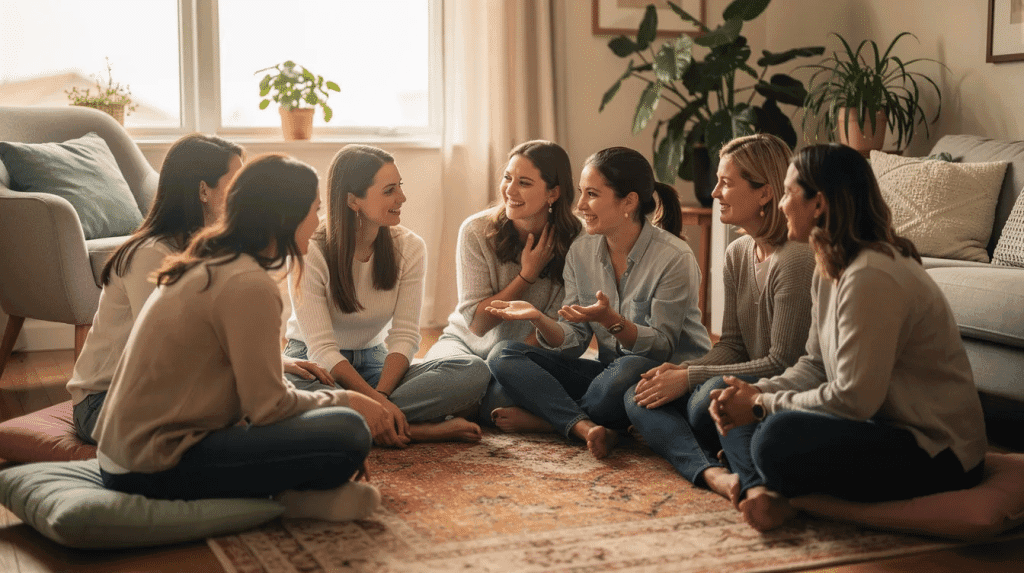
Women’s recovery groups are specialized environments designed to address the unique biological, psychological, and social challenges women face during recovery. These support groups provide safe, gender-specific spaces to heal from substance use, trauma, and mental health challenges while building connection with other women who understand the recovery journey.
For many women, mixed-gender meetings are helpful. But women only groups can offer something different: fewer co-gender relationship dynamics, more room for sensitive conversations, and less fear of judgment when discussing sexual assault, motherhood, alcohol abuse, trauma, postpartum depression, eating disorders, love addiction, or family responsibilities.
These groups are not a replacement for professional help. They work best alongside substance abuse treatment, addiction treatment, therapy, and dual diagnosis care. Outpatient recovery programs provide flexibility for individuals to engage in treatment while maintaining daily responsibilities, making them suitable for women who may have family or work obligations. Partial Hospitalization Programs (PHP) and Intensive Outpatient Programs (IOP) are common types of outpatient recovery programs that offer structured treatment while allowing patients to live at home.
How We Chose the Best Women’s Recovery Groups
We evaluated women’s recovery groups based on practical factors that affect real-life recovery:
- Accessibility through in person meetings, online meetings, or hybrid formats
- Evidence-based tools and research support
- Gender-specific care and trauma-informed language
- Peer support groups, sponsorship, coaching, or mentorship
- Flexibility for early recovery, long term recovery, and relapse prevention
- Cost, donation-based access, and fit with professional treatment options
- Support for co-occurring mental health issues and substance use disorders
Research indicates that women in outpatient recovery programs often benefit from gender-specific care, which addresses their unique experiences and challenges in recovery. Women with co-occurring mental health disorders and substance use issues often face unique challenges that require integrated treatment approaches.
Research also indicates that women are more likely to experience stigma and shame related to substance use disorders, which can hinder their willingness to seek treatment for dual diagnosis. Effective dual diagnosis treatment for women often includes trauma-informed care, recognizing the high prevalence of trauma histories among women with substance use disorders.
Women frequently enter addiction treatment with lower self-esteem and distinct trauma profiles compared to men. Research indicates that women are more likely than men to have experienced trauma, with estimates suggesting that between 55% and 99% of women in addiction treatment have had traumatic experiences.
Top 6 Women’s Recovery Groups for Lasting Support
1. Women for Sobriety (WFS)
Women for Sobriety is one of the best-known recovery groups created specifically for women. Founded by Jean Kirkpatrick in 1975, women for sobriety uses the new life program, a secular life program built around 13 Acceptance Statements, emotional responsibility, self esteem, and positive change.
Women-focused support groups, such as Women for Sobriety, provide a platform for women to share their experiences and support each other in recovery from substance use disorders.
Why It Stands Out
The wfs program focuses on affirmations rather than powerlessness. Programs tailored for women often utilize positive reinforcement and affirmations to reclaim authority over choices and promote self-esteem.
WFS language includes ideas such as “negative thoughts destroy only myself,” “problems bother me only to the degree I permit,” and “I am a competent woman.” Its fundamental object is helping women remove negativity, build coping skills, and take responsibility for their life.
Best For
WFS is best for women seeking secular, empowerment-based recovery without religious components.
Key Strengths
- First national self-help program designed specifically for women
- Strong focus on low self esteem, confidence, and emotional and spiritual growth
- wfs meetings are available in person and online
- Encourages daily exercise in reflection, affirmations, and self-awareness
- Supports women who want lasting sobriety without a traditional 12-step model
A comparative study in the Journal of Substance Abuse Treatment found that WFS, SMART Recovery, LifeRing, and 12-step groups showed similar effectiveness when participants were highly involved and aligned with their recovery goals.
Possible Limitations
WFS may not fit women who prefer spiritual growth through a higher-power framework. Availability may also be limited in some local communities, though the wfs board continues to support online access and meeting growth.
2. SHE RECOVERS
SHE RECOVERS® Foundation is a global grassroots movement supporting women and non-binary individuals recovering from substance use, trauma, grief, burnout, eating disorders, or mental health challenges.
Why It Stands Out
SHE RECOVERS takes a broad view of recovery. It recognizes that substance abuse, addictive behaviors, mental health, grief, burnout, and trauma often overlap.
Best For
SHE RECOVERS is best for women who want holistic support beyond substance use alone.
Key Strengths
- Inclusive community of more than 325,000 women and non-binary participants globally
- Offers coaching, yoga, movement, education, and sharing circles
- Helps women find belonging when isolation is part of the recovery process
- Useful for women balancing recovery with family responsibilities
Support groups specifically for women can help reduce feelings of isolation and provide emotional validation, which is crucial for women facing similar challenges in recovery. Sharing struggles with peers reduces isolation and fosters a community that understands individual challenges.
Possible Limitations
SHE RECOVERS may feel less structured than alcoholics anonymous or SMART Recovery. Because it addresses many forms of recovery, some women may prefer a narrower focus on alcohol dependence, drug and alcohol abuse, or alcohol use disorder.

3. SMART Recovery for Women
SMART Recovery is a science-based recovery model using cognitive behavioral tools, motivation, and practical problem-solving. Gender-specific recovery groups can include 12-Step programs, secular support groups, and trauma-informed recovery spaces, and SMART fits well for women who want a secular, skills-based path.
Why It Stands Out
SMART focuses on changing thoughts, emotions, and behaviors. Women’s groups offer practical coping mechanisms, facilitating the exchange of strategies to manage cravings and triggers.
Best For
SMART Recovery for Women is best for women who prefer practical tools over spiritual approaches.
Key Strengths
- Focuses on coping skills, urge management, and behavioral change
- Helps participants challenge negative thoughts
- Can support women with substance use and co-occurring mental health issues
- Strong fit for women who want measurable recovery goals
Alcohol research has shown that women’s recovery outcomes may be strongly connected to self-efficacy in managing negative moods. This makes CBT-style strategies especially relevant for many women.
Possible Limitations
SMART can feel clinical for women who want more emotional or spiritual connection. It also works best when participants stay active between meetings and practice the tools regularly.
4. Alcoholics Anonymous Women’s Meetings
Alcoholics Anonymous women’s meetings offer the traditional 12-step approach in rooms for only women. These meetings are common in many treatment facilities, churches, community centers, and online directories.
Why It Stands Out
AA is widely available and has decades of shared experience behind it. Women-only spaces eliminate co-gender relationship dynamics, allowing open discussions on sensitive topics without fear of judgment.
Best For
AA women’s meetings are best for women who connect with spiritual recovery, sponsorship, step work, and structured community support.
Key Strengths
- Global meeting availability
- Strong sponsor and mentorship culture
- Helpful for alcohol abuse, alcohol dependence, and alcohol use disorder
- Offers support from women in recovery at many stages of sobriety
Women in recovery often feel more comfortable in women-only support groups due to past trauma or discomfort in mixed-gender settings, which can hinder their ability to be vulnerable and receive support.
Possible Limitations
The spiritual component may not fit everyone. Some women also feel that language around powerlessness conflicts with empowerment-based treatment. For sobriety women may need to try both AA and secular options before deciding what helps them stay sober.
5. The Phoenix
The Phoenix is a sober-active recovery community that uses fitness, outdoor activities, and connection to support recovery. It is not exclusively for women, but many women benefit from its active, community-centered model.
Why It Stands Out
The Phoenix combines movement with recovery community building. For women whose addiction became a life threatening problem, rebuilding physical strength and social confidence can be powerful.
Best For
The Phoenix is best for active women who want fitness integrated into their recovery journey.
Key Strengths
- Free fitness classes and outdoor activities
- Supports well being through movement and connection
- Encourages confidence, identity, and community
- Helps reduce isolation through sober social events
Studies show that women with more social support tend to stay in treatment and maintain sobriety for longer, highlighting the importance of a supportive community in recovery journeys. Being part of a recovery-specific support network can increase motivation to stay sober, as individuals feel more supported by peers who understand their experiences and challenges.
Possible Limitations
Most Phoenix meetings are mixed-gender, so women only groups may be limited. It may also not address deeper therapeutic needs related to trauma, postpartum depression, or complex mental health without additional treatment.
6. In The Rooms Virtual Platform
In The Rooms is an online recovery platform offering many types of meetings, including 12-step and non-12-step options. It can be useful for women who need privacy, convenience, or flexible scheduling.
Why It Stands Out
It provides virtual access from almost anywhere, which matters for women with childcare barriers, work demands, transportation issues, anxiety, or limited local communities.
Best For
In The Rooms is best for women with mobility issues, social anxiety, rural locations, or limited local group options.
Key Strengths
- Over 150 live meetings weekly across different recovery approaches
- Offers anonymity and convenience
- Includes multiple women-centered meeting types
- Helpful when in person groups are not available
Women entering addiction treatment are more likely to have primary responsibility for their children, which can create additional barriers to seeking and maintaining treatment, such as childcare issues and fear of legal repercussions. Online access can reduce some of these barriers.
Possible Limitations
Virtual meetings may not provide the same physical sense of community as in-person meetings. They also require reliable internet and comfort with technology.

Quick Comparison of the Best Women’s Recovery Groups
- Women for Sobriety – Best for empowerment-focused, secular recovery
- SHE RECOVERS – Best for holistic recovery from various challenges
- SMART Recovery for Women – Best for science-based, skills-focused recovery
- AA Women’s Meetings – Best for spiritual, structured 12-step recovery
- The Phoenix – Best for fitness-integrated community recovery
- In The Rooms – Best for convenient virtual meeting access
Some women benefit from a companion version of support: one group for daily peer connection and another clinical program for therapy, psychiatric care, and relapse prevention.
How to Choose the Right Recovery Group
Choose Based on Recovery Philosophy
Start with the group’s core philosophy. If you want spiritual structure, alcoholics anonymous may fit. If you want secular empowerment, WFS may feel better. If you want science-based tools, SMART Recovery is a strong option.
An american journal or clinical study can provide helpful data, but personal fit still matters. The best group is usually the one you will actually attend consistently.
Choose Based on Meeting Format Preferences
Some women need in person accountability. Others need online meetings because of family responsibilities, work schedules, transportation, or privacy.
Resources offered by women’s recovery programs frequently include life skills workshops, parenting classes, and job placement assistance. If those supports matter to your recovery process, look for treatment centers or community programs that include them.
Choose Based on Recovery Stage and Needs
Early recovery often requires structure, safety, and frequent support. Long term recovery may focus more on connection, purpose, service, and relapse prevention.
Women with substance use disorders often face unique barriers and challenges compared to men, including societal stigma and greater feelings of shame and guilt associated with addiction. Women in recovery often experience feelings of isolation, and support groups can significantly reduce these feelings by providing emotional validation and practical coping strategies.
If trauma, depression, anxiety, or other mental health symptoms are present, peer groups should be paired with professional treatment.
Which Recovery Group Is Best for You?
Use this simple guide:
- Choose Women for Sobriety if you want empowerment-based affirmations and a secular new life program.
- Choose SHE RECOVERS if you need support for substance use, grief, trauma, burnout, eating disorders, or mental health.
- Choose SMART Recovery if you prefer evidence-based tools, coping skills, and structured behavior change.
- Choose AA Women’s meetings if you connect with spiritual recovery, sponsorship, and step work.
- Choose The Phoenix if fitness and sober community are important to your recovery.
- Choose In The Rooms if you need flexible online meetings and privacy.
Many women try several groups before finding the right fit. That is not failure. It is part of learning what kind of support helps you maintain sobriety.
Final Thoughts
Women’s recovery groups can benefit women by reducing shame, increasing support, and creating safer places for shared experiences. They are especially valuable when substance, alcohol, trauma, and mental health overlap.
At Sun County Wellness, we support women exploring multiple treatment options, including PHP, IOP, OP, virtual outpatient care, therapy, holistic healing, and peer support groups. The goal is not just to stop addictive behaviors. The goal is recovery, stability, self-trust, and a life that feels worth protecting.
If you or someone you love is considering substance abuse treatment, addiction treatment, or dual diagnosis care, reach out to Sun County Wellness to verify insurance and discuss women-only outpatient support designed around privacy, trauma-informed care, and lasting sobriety.