

Clinically Reviewed By Brittany Astrom - LMFT
Brittany has 15 years of experience in the Mental Health and Substance Abuse field. Brittany has been licensed for almost 8 years and has worked in various settings throughout her career, including inpatient psychiatric treatment, outpatient, residential treatment center, PHP and IOP settings.
Women’s Mental Health Therapist Near Me: Finding the Right Fit in Orange County
Finding a therapist who truly understands how biological changes, social roles, and life stages shape women’s emotional health is a crucial step toward lasting recovery and resilience. This guide walks through what gender‑specific mental health care looks like, how it differs from general adult therapy, and why matching on clinical approach and provider expertise matters—especially here in Orange County. You’ll get practical steps to locate qualified clinicians nearby, the credentials and screening questions that reveal clinical fit, and a clear look at how common issues like anxiety, depression, trauma, and co‑occurring substance use are treated in gender‑informed settings. We also compare levels of care (PHP, IOP, outpatient, sober living), explain insurance and payment options with common carriers listed, and review the pros and limits of online therapy for women. Throughout, the focus is on concrete next steps: how to evaluate a therapist, when to consider more intensive care, and exactly how to check benefits and request admissions for integrated, gender‑specific services.
What Is Gender-Specific Mental Health Therapy for Women?

Gender‑specific mental health therapy adapts evidence‑based care to the biological, developmental, and social realities many women face. Clinicians blend trauma‑informed practices, awareness of hormonal and reproductive lifecycle issues, and proven modalities such as CBT, DBT, and trauma‑focused therapies to address symptoms that often present differently in women. The advantage is better engagement and outcomes because treatment directly targets gendered risk factors—interpersonal violence, caregiving burden, and transitions like pregnancy or menopause—within a validating, safe therapeutic context. Recent clinical perspectives highlight that gender‑informed care lowers barriers to disclosure and supports personalized relapse‑prevention plans, which is especially important when substance use co‑occurs. Knowing how gender‑specific therapy works helps explain why many clinicians recommend matched approaches for women with complex trauma or dual diagnosis.
How Does Gender-Specific Care Address Women’s Unique Mental Health Needs?
Gender‑specific care intentionally accounts for hormonal influences, higher rates of interpersonal trauma, and social role demands that shape symptoms and treatment response. Clinicians routinely assess reproductive events (pregnancy, postpartum, perimenopause) and consider how substance use may interact with hormonal cycles to guide timing of medication and therapeutic work. The approach emphasizes safety planning and trust building for clients with trauma histories, using interventions like EMDR or trauma‑focused CBT along with skills training (DBT) for stabilization. Practical adaptations—such as flexible session times or adjusted homework expectations for primary caregivers—reduce dropout and improve adherence. Tailoring treatment this way tends to boost retention and symptom improvement versus one‑size‑fits‑all care.
Why Choose a Female Therapist for Women’s Mental Health?
Many women prefer a female therapist for reasons of comfort, cultural fit, or a sense of safety when discussing gendered or intimate issues. Clients who feel understood and safe often disclose sooner, form a therapeutic alliance faster, and engage more fully in treatment tasks. That said, clinical specialization and therapeutic approach—trauma certification, dual‑diagnosis experience, and skill in DBT/CBT—are frequently more important than gender alone for achieving clinical progress. The best approach is to prioritize clinicians who combine relevant training with a relational style that feels safe; during an initial consultation, ask about trauma‑informed practice, experience across women’s life stages, and dual‑diagnosis treatment to assess fit.
How to Find a Women’s Mental Health Therapist Near Me in Orange County?
Finding a qualified women’s therapist in Orange County is easier with targeted searching, focused filters, and a short vetting script to assess clinical fit quickly. Start with local directories and trusted referrals from medical or substance‑use providers, then narrow results by gender preference, specialties (trauma, perinatal, addiction), insurance acceptance, and telehealth availability. Use a brief consultation call or intake form to confirm experience with women’s issues, primary modalities, and approach to co‑occurring disorders. For those seeking gender‑specific or dual‑diagnosis care in Orange County, clinics that explicitly offer women‑focused programs and integrated addiction and mental health services can speed access to the right level of care. One local option is Sun County Wellness, a dual‑diagnosis center for women offering gender‑specific PHP, IOP, outpatient programs, sober living, and supportive housing; contacting admissions at a gender‑specific center can clarify program fit and next steps for intake.
- 1Search local directories and ask trusted providers for gender‑specific or dual‑diagnosis referrals.
- 2Filter by therapist gender (if preferred), specialty (trauma, perinatal, addiction), and whether they accept your insurance.
- 3Read profiles for therapy modalities (CBT, DBT, EMDR) and experience with different women’s life stages.
- 4Schedule a 15‑minute consultation to ask about approach, availability, and typical outcomes for similar clients.
- 5Confirm logistics—session format, fees or sliding scale options, and whether the program coordinates care for co‑occurring conditions.
These steps help you prioritize clinicians who combine the right credentials with an approach that fits your needs, and they create a clear path to admission when a higher level of care is required.
What Questions Should I Ask When Choosing a Women’s Therapist?
A short, focused screening conversation can reveal clinical competence and practical fit without a full evaluation. Key questions cover a therapist’s experience with women’s issues and trauma, training in evidence‑based methods like CBT, DBT, or EMDR, and experience treating co‑occurring substance use. Also ask practical questions about session length, fees, insurance acceptance, and telehealth options—these details affect continuity of care. Watch for red flags such as vague descriptions of trauma work, reluctance to coordinate with medical providers, or unclear answers about insurance and authorizations. Use responses to rank providers by clinical match and accessibility before committing to ongoing sessions.
- Ask about experience with women’s life stages, trauma modalities used, dual‑diagnosis treatment experience, session logistics, and collaboration with medical providers.
This quick checklist helps you decide whether a therapist meets both clinical and logistical needs and whether to proceed with intake or a referral.
Which Credentials and Specializations Matter for Women’s Mental Health Therapists?
Credentials indicate training and legal scope of practice—knowing them helps you choose the right provider. Licensed clinicians such as LCSWs (Licensed Clinical Social Workers), LMFTs (Licensed Marriage and Family Therapists), and PsyDs or PhDs (clinical psychologists) commonly provide psychotherapy and assessment, while psychiatric prescribers (MDs, DOs, or nurse practitioners) manage medications. Prioritize specializations like trauma certification, addiction treatment training, perinatal mental health, and demonstrated competence in evidence‑based therapies (CBT, DBT, EMDR). Experience coordinating care for dual diagnosis—treating mental health and substance use together—is especially important for women with co‑occurring conditions. Balance documented clinical skills with practical fit and the potential for a strong therapeutic alliance.
- Look for credentials and specializations such as LCSW, LMFT, PsyD/PhD, trauma certification, addiction training, perinatal mental health, and evidence‑based therapy expertise.
Confirming these credentials during a consultation helps ensure the clinician has both the legal scope and specialist training appropriate for women’s mental health needs.
What Mental Health Conditions Do Women’s Therapists Commonly Treat?
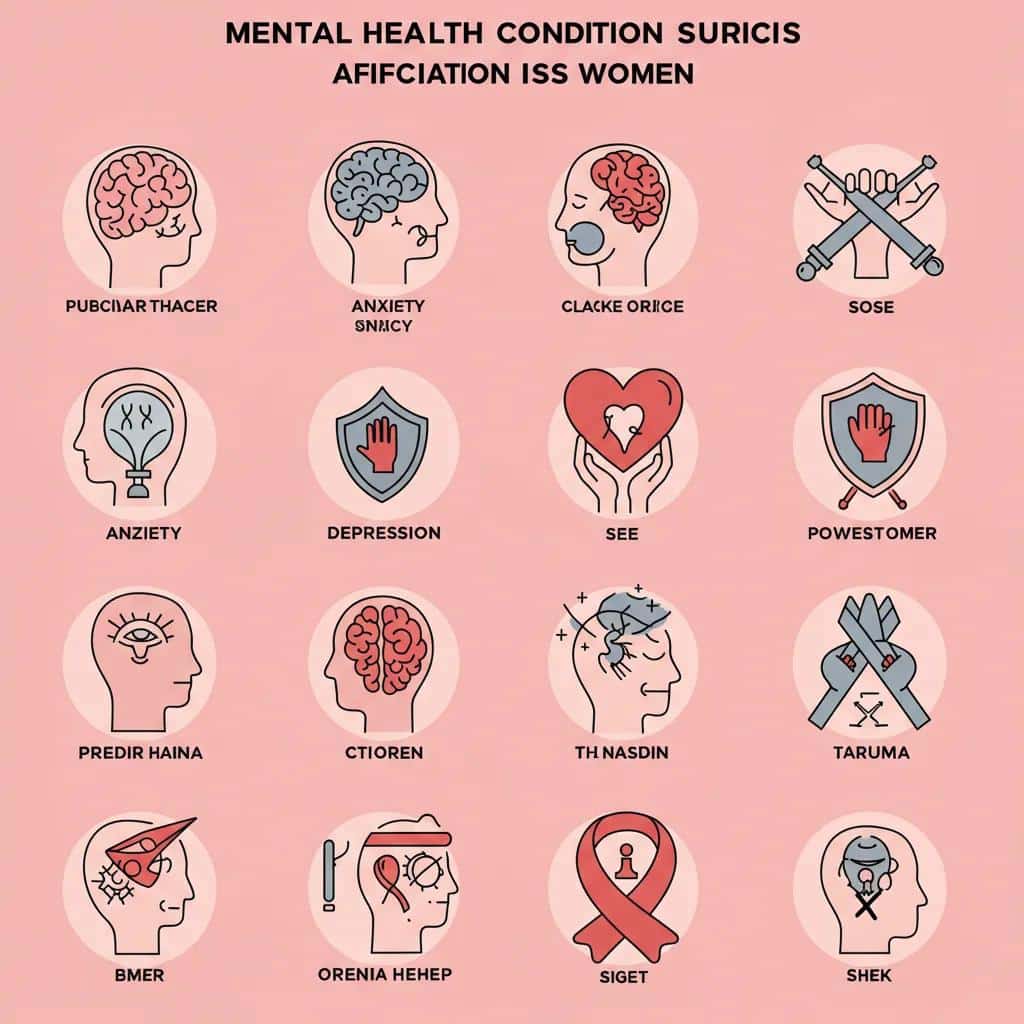
Women’s therapists commonly treat conditions that often intersect with gendered experiences—anxiety disorders, major depressive disorder, trauma and PTSD, bipolar disorder, OCD, personality disorders, and substance use disorders. These conditions can present differently in women because of hormonal cycles, caregiving stress, and higher rates of interpersonal trauma, so assessment and treatment planning are often tailored and integrated. Typical pairings include CBT or medication management for anxiety and depression, trauma‑focused therapies and stabilization skills (DBT or EMDR) for trauma, and integrated dual‑diagnosis programs for co‑occurring substance use. Early identification and matching treatment intensity—outpatient for mild cases, IOP or PHP for moderate to severe symptoms—improve outcomes and lower relapse risk.
Below is a concise mapping of common conditions to typical therapy modalities and expected program level:
Condition
Typical Therapy Modality
Expected Program Level
Anxiety Disorders
CBT, exposure therapy, skills‑based CBT/DBT
Outpatient therapy; IOP if severe
Major Depressive Disorder
CBT, interpersonal therapy, medication management
Outpatient; IOP/PHP for high risk or significant functional impairment
Trauma / PTSD
EMDR, trauma‑focused CBT, DBT for stabilization
Outpatient; IOP/PHP for complex or persistent trauma
Bipolar Disorder
Mood stabilization, psychoeducation, CBT
Outpatient with psychiatric management; PHP when unstable
OCD
Exposure and response prevention (ERP), CBT
Outpatient; IOP for severe cases
Substance Use Disorders
Integrated therapy, relapse prevention, medication‑assisted treatment
IOP/PHP and aftercare through sober living
This mapping clarifies how modality and program intensity align with symptom severity and complexity, helping guide decisions about when to step up care.
How Are Anxiety, Depression, and Trauma Treated in Women?
Anxiety, depression, and trauma in women respond best to an integrated approach: evidence‑based psychotherapy, medication when indicated, and supportive lifestyle and social supports. CBT and DBT teach concrete skills for mood and emotion regulation, while EMDR and trauma‑focused CBT address traumatic memories and maladaptive beliefs. Adjunctive supports—mindfulness, nutrition, sleep hygiene, and exercise—complement core therapy and are helpful for women juggling caregiving or recovery from substance use. When symptoms threaten safety or functioning, higher levels of care (IOP or PHP) provide daily therapeutic intensity, medical oversight, and coordinated group supports to speed stabilization and reduce relapse risk.
What Is Dual Diagnosis Treatment and Why Is It Important for Women?
Dual diagnosis treatment means integrated care that treats mental health disorders and co‑occurring substance use within a single, coordinated plan. This model is especially important for women because trauma‑related pathways to substance use and gendered social stressors are common. Integrated programs combine medical management, psychotherapy, relapse‑prevention planning, and aftercare to address interacting conditions at once rather than sequentially. Treating both issues together lowers relapse risk and improves engagement by addressing emotional triggers and substance use behaviors simultaneously. Coordinated care components often include medication management, group therapy, family involvement, and continuity into sober living or supportive housing as needed.
Condition
Attribute
Value
Dual Diagnosis
Definition
Integrated treatment for co‑occurring mental health and substance use disorders
Dual Diagnosis
Importance for Women
Addresses trauma‑related pathways to substance use and improves retention
Dual Diagnosis
Core Components
Medical care, coordinated psychotherapy, relapse prevention, aftercare
This summary highlights why integrated dual‑diagnosis models are essential for many women seeking sustained recovery and mental health stabilization.
What Types of Women’s Mental Health and Addiction Treatment Programs Are Available?
Programs range from weekly outpatient psychotherapy to more structured options like intensive outpatient (IOP) and partial hospitalization (PHP), plus residential supports such as sober living and supportive housing. Each level varies by intensity, duration, and services offered: outpatient therapy normally means weekly sessions for skill building and symptom management; IOP delivers several hours of therapy across multiple days while preserving home responsibilities; PHP provides full‑day clinical services without overnight stays for stabilization; sober living and supportive housing offer supervised, substance‑free environments that support recovery. Choosing the right level depends on symptom severity, safety needs, and social supports—women with unstable housing, childcare demands, or complex trauma often benefit from gender‑specific program adaptations that address these barriers.
Below is a comparative table summarizing core program types and their typical uses:
Program
Intensity
Typical Duration
Partial Hospitalization Program (PHP)
High: daily clinical care, medical oversight
Several weeks to months
Intensive Outpatient Program (IOP)
Moderate: multiple days per week, several hours per day
6–12 weeks common
Outpatient Therapy (OP)
Low: weekly individual or group sessions
Ongoing; varies by need
Sober Living / Supportive Housing
Environmental support: structured, peer‑led supervision
Transitional—months to years depending on needs
How Do Partial Hospitalization and Intensive Outpatient Programs Support Women’s Recovery?
PHP and IOP support recovery by combining structured, evidence‑based therapy with medical and psychiatric services tailored to gendered needs—childcare coordination, trauma‑informed group work, and practical life‑skills training. PHP typically offers full‑day services (individual and group therapy, medical monitoring, case management) for stabilization without inpatient admission. IOP is more flexible, with multiple weekly sessions that emphasize skills practice and relapse prevention while allowing the client to keep some home responsibilities. Both models emphasize peer support, family involvement, and concrete relapse‑prevention strategies, and they bridge inpatient care and outpatient therapy for women transitioning back to daily life.
What Role Do Sober Living and Supportive Housing Play in Women’s Treatment?
Sober living and supportive housing create a transitional setting that reinforces recovery routines, accountability, and social supports after intensive treatment. These environments usually require sobriety, house rules, and participation in recovery activities, which helps lower relapse risk while clients rebuild employment, parenting, and housing stability. For women, sober living often includes gender‑specific supports—safe communal spaces, trauma‑informed house policies, and links to childcare and vocational resources—that address common recovery barriers. Sober living complements clinical treatment by offering ongoing peer accountability and a structured place to practice relapse‑prevention skills learned in therapy.
After reviewing program options, anyone seeking openings or coordinated admissions for gender‑specific care can contact specialized providers in Orange County. Sun County Wellness operates as a gender‑specific, dual‑diagnosis center offering PHP, IOP, outpatient programs, sober living, and supportive housing geared to women’s needs; contacting admissions at such a center can clarify eligibility, program sequencing, and the steps to begin treatment.
How Can I Afford Women’s Mental Health Therapy? Insurance and Financial Options Explained
Affording women’s mental health care usually starts with insurance verification, understanding expected out‑of‑pocket costs, and exploring alternative payment options when coverage is limited. A benefits check clarifies covered services, copays, deductibles, and any prior‑authorization requirements. Major carriers commonly accepted by behavioral health providers include Aetna, Anthem, Blue Cross Blue Shield, Cigna, and Humana. If insurance falls short, sliding‑scale fees, payment plans, community mental health centers, and telehealth can reduce costs. A practical first step is to request a benefits verification so you know what services are covered, what authorizations are required, and what you’ll owe before beginning treatment.
Payment Option
Attribute
Value
Insurance Verification
What it does
Clarifies covered services, copays, and authorization needs
Sliding Scale / Payment Plans
Who benefits
Low‑income clients or those without full coverage
Out-of-Pocket
Typical use
Faster access and fewer administrative delays
Community Resources
How accessed
Local clinics, grants, and nonprofit programs
Which Insurance Providers Does Sun County Wellness Accept for Women’s Treatment?
Provider networks vary, but examples of major carriers often partnered with behavioral health centers include Aetna, Anthem, Blue Cross Blue Shield, Cigna, and Humana; these payers commonly cover PHP and IOP with prior authorization when medically necessary. Insurance verification typically requires your insurance ID, the services requested, and clinical details to determine medical necessity for higher levels of care. After a benefits check, next steps usually include pre‑authorization (if required), confirmation of copay/deductible responsibilities, and scheduling intake. If you’re considering a gender‑specific dual‑diagnosis program, request a benefits check early to clarify authorized services and expected financial responsibilities.
- To request benefits verification, provide insurer name and ID, the proposed level of care, and authorization to release clinical details; you should receive confirmation of covered services, copays, and any pre‑authorization requirements.
This step helps avoid surprise costs and supports timely admissions into the appropriate women’s program.
What Are My Options If I Don’t Have Insurance for Women’s Therapy?
If you don’t have insurance, practical alternatives can still make therapy accessible: sliding‑scale fees, installment payment plans, community mental health centers with reduced rates, and lower‑cost telehealth sessions. Peer‑support groups and nonprofit programs can provide interim stabilization while you arrange longer‑term care, and some providers have limited pro‑bono slots or can connect you with grant funding. Telehealth often lowers overhead for providers and may translate into lower session fees—confirm licensing and privacy protections before starting. Exploring these options while also requesting a benefits check where possible gives you more pathways into care.
What Are the Benefits of Online Therapy for Women?
- 1Improved access: Telehealth reduces geographic and scheduling barriers for women with caregiving responsibilities.
- 2Continuity of care: Virtual sessions help maintain therapy during life transitions or moves.
- 3Wider specialist pool: Online care increases access to clinicians with specific women’s health expertise.
These advantages make online therapy a practical choice for many women, but it should be weighed against the need for in‑person medical oversight or hands‑on supports in more complex cases.
How Does Virtual Therapy Support Women’s Mental Health Needs?
Virtual therapy supports women by offering flexible scheduling for caregiving, work, and travel, and by preserving continuity of care when in‑person visits aren’t possible. CBT and many individual therapies retain strong effectiveness via telehealth, and safety protocols can be adapted with clear crisis plans and local emergency contacts. Technology readiness and privacy (secure platforms, a private space) are essential, and clinicians should review session safety, reporting mandates, and contingency plans at intake. Telehealth is especially valuable for women in areas with limited specialty care or for those seeking clinicians with specific training not available locally.
How to Find Qualified Female Therapists Offering Online Counseling Near Me?
To find qualified female therapists offering online counseling, use directory filters for provider gender and telehealth availability, verify licensure and specialty (trauma or perinatal mental health), and request a short telehealth trial to assess comfort and technology. Ask about the clinician’s telehealth experience, crisis management procedures, and ability to coordinate care with local medical providers if needed. Confirm that insurance covers telehealth sessions and whether the provider can document clinical necessity should escalation to a higher level of care be required.
- Telehealth vetting checklist: confirm licensure and jurisdiction, verify telehealth coverage with your insurer, ask about platform security, review crisis management plans, and request a trial session.
This structured approach helps you choose a telehealth provider who blends clinical expertise with reliable virtual practice standards and preserves continuity of care when remote delivery is appropriate.
Frequently Asked Questions
What should I consider when evaluating a therapist's approach to treatment?
When evaluating a therapist, look at the modalities they use, their experience with women’s issues, and how they apply trauma‑informed principles. Ask about evidence‑based practices like CBT or DBT and how treatment is individualized. Understanding a therapist’s treatment philosophy and how they measure progress will help you decide if their approach matches your goals and comfort level.
How can I ensure my therapist is culturally competent?
Cultural competence means the therapist recognizes and respects diverse backgrounds and tailors care accordingly. Ask about their training in cultural sensitivity, experience with clients from backgrounds like yours, and how they incorporate cultural factors into treatment planning. A culturally competent clinician will welcome discussion about your identity and how it affects your mental health.
What role does family involvement play in women's mental health treatment?
Family involvement can be an important part of treatment—particularly for trauma or substance use—by providing support, improving communication, and helping address relational dynamics that affect recovery. Therapists may include family sessions or invite family participation in treatment planning when appropriate, always with the client’s consent and safety in mind.
Are there specific resources for women dealing with postpartum mental health issues?
Yes. Resources include support groups, hotlines, and specialized perinatal therapy programs. Organizations such as Postpartum Support International provide information and local referrals. Many clinicians specialize in perinatal mental health, and community health centers often offer programs tailored to new mothers. Early support significantly improves outcomes for parents and babies.
What are the signs that I may need a higher level of care?
Consider a higher level of care if symptoms persist or worsen, daily responsibilities become unmanageable, there are thoughts of self‑harm, or substance use interferes with recovery. If outpatient therapy doesn’t provide relief or crises arise, options like IOP or PHP may be appropriate. Talk with your therapist or a clinical intake team to evaluate the best next step.
How can I maintain progress after completing a therapy program?
To maintain gains, continue self‑care, stay connected to support networks, and consider periodic check‑ins with a mental health professional. Build routines that include exercise, sleep, and mindfulness, and join support groups or community activities for accountability. Have a relapse‑prevention plan and clear steps to access care quickly if challenges return.

Seeking Treatment? We Can Help
At Sun County Wellness, as an in-network provider we work with most insurance plans, such as:
If you or a loved one are struggling with mental health challenges or substance abuse, reach out to Sun County Wellness today. Our team of compassionate professionals is here to support your journey towards lasting well-being. Give us a call at 949-993-1149
Visit SAMHSA or contact us today for more inforamtion.