
Self-Care for Women with Anxiety: Daily Habits That Actually Work
Medical Disclaimer: This article is intended for informational purposes only and is not medical advice. Severe or chronic anxiety can lead to panic disorders, physical illness, or depression. If you are experiencing chest pain, uncontrolled panic attacks, or thoughts of self-harm, call 988 or go to the nearest emergency room right away. For a confidential clinical assessment and holistic treatment options, contact Sun County Wellness.
Introduction: The "Bubble Bath" Myth
Telling a woman in Orange County who is drowning in anxiety to “just practice self-care” often feels dismissive—and for good reason.
Wellness culture has turned self-care into a shopping list: a scented candle, a sheet mask, a long bath. These are not wrong in themselves, but they are marketed as cures for burnout and clinical anxiety when they are not. That can leave women feeling misunderstood and worse than before.
If you live with clinical anxiety, you already know this: a bubble bath cannot reset a dysregulated nervous system.
Real self-care builds a life you don’t need to escape from. It’s about making daily choices that signal safety to your brain and body. That takes clear boundaries, consistent habits, and an understanding of how stress affects your physiology.
At Sun County Wellness, rooted in the calming, historic landscape of San Juan Capistrano, we specialize in treating women whose anxiety has moved past ordinary stress into survival mode. In this guide, we cover the neuroscience of female anxiety, name the numbing behaviors we confuse for rest, and offer an evidence-informed, practical roadmap of daily habits that support nervous system healing.
If you’re ready to move from surviving to living with ease, learn more about our Women’s Mental Health Programs at Sun County Wellness.

The Neuroscience: Why Women’s Anxiety is Different
To manage anxiety, it helps to understand the biological and social factors that make many women uniquely vulnerable.
Data from the National Institute of Mental Health (NIMH) show that women are more than twice as likely as men to develop an anxiety disorder. This difference reflects a convergence of hormonal, neural, and cultural pressures.
1. The Hormonal Rollercoaster
The female brain is sensitive to shifts in estrogen and progesterone, which influence serotonin (mood regulation) and GABA (the brain’s natural calming neurotransmitter). Drops in progesterone—before a period, after childbirth, or during perimenopause—can reduce the brain’s natural “brake,” producing sudden increases in panic or intrusive thoughts.
2. The Amygdala and the "Invisible Load"
The amygdala is the brain’s threat detector. Many women carry an “invisible load”: anticipating others’ needs, coordinating schedules, absorbing emotional labor, and meeting professional expectations. That chronic vigilance keeps the amygdala on high alert.
Over time, this state becomes the default. Cortisol floods the body as if preparing to face a physical threat—sometimes while you’re simply sitting in traffic on the 5 Freeway.
Numbing vs. Regulating: The Self-Care Trap
When your nervous system sits in fight-or-flight, the sensations are intense: tightness in the chest, a racing heart, and thoughts that won’t quiet down.
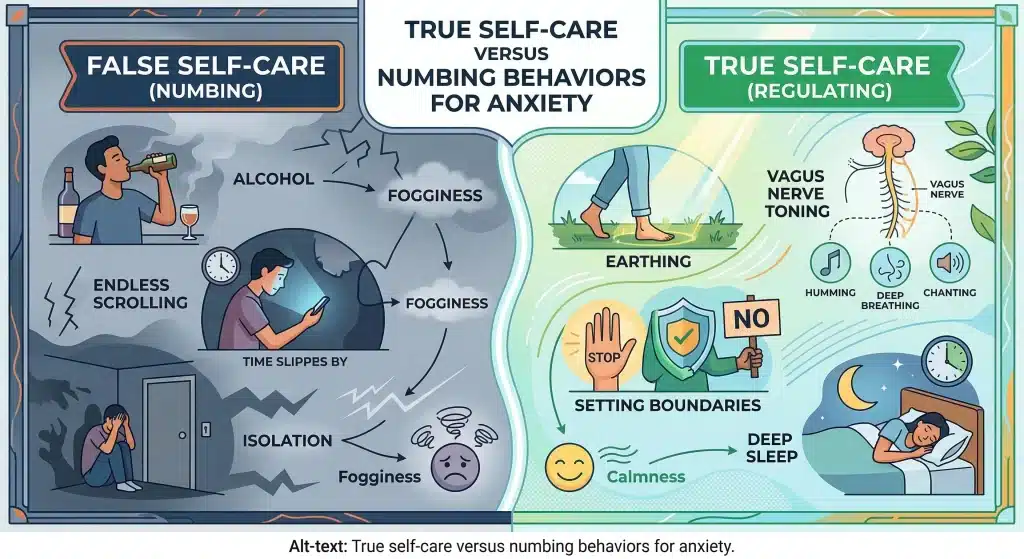
In search of relief, many women rely on false regulators.
- The “Wine Mom” Trap: Alcohol is a central nervous system depressant that mimics GABA for a short time. That temporary calm is often followed by a rebound effect—heightened anxiety, disrupted sleep, and the familiar 3:00 a.m. wake-up with racing thoughts.
- Doomscrolling: Long stretches of social media or video content can feel like “checking out,” but they often push the nervous system into a dorsal vagal shutdown (freeze). That’s dissociation, not rest.
According to the Substance Abuse and Mental Health Services Administration (SAMHSA), using substances to manage anxiety is a major contributor to co-occurring disorders in women.
True self-care is somatic regulation. It’s the active practice of sending safety signals to your body. Below are simple, science-aligned ways to do that.
Daily Habits for an Anxious Nervous System
Healing anxiety happens through repeated, intentional biological resets woven into your day.
Part 1: The Morning Anchor (Owning Your Cortisol)
The first 30 minutes of your day set the nervous system tone for many hours to come.
1. The “No-Tech” First Hour Checking your phone the moment you wake invites external demands into your nervous system and triggers an exaggerated Cortisol Awakening Response (CAR).
- The Habit: Use a traditional alarm clock and charge your phone outside the bedroom. Wait at least 30 minutes to look at screens, and start the day with a glass of water.
2. Morning Sunlight and Circadian Rhythm Sleep problems and anxiety reinforce one another. Morning light helps reset your circadian clock, improving sleep and daytime regulation.
- The Habit: Step outside within 20 minutes of waking. Let natural light reach your eyes (no sunglasses) for 5–10 minutes. This helps shift melatonin and cortisol rhythms so you naturally feel tired again about 14 hours later.
3. Earthing in San Juan Capistrano Our bodies are bioelectrical; regular contact with the earth can support regulation.
- The Habit: Go barefoot on grass or sand for a few minutes. Simple grounding—or “earthing”—appears to reduce inflammation and soothe the autonomic nervous system.
Part 2: The Mid-Day Reset (Clearing the Static)
Anxiety can build like static. Learn to discharge it before it becomes overwhelming.
4. Nutritional Psychiatry (The Blood Sugar Rule) Blood sugar swings and excess caffeine can trigger adrenaline surges that feel indistinguishable from panic.
- The Habit: Eat a protein-rich meal within an hour of waking, carry snacks with healthy fats (nuts, avocado), and limit caffeine to one cup after you’ve eaten.
5. The Physiological Sigh A targeted breath can rapidly downshift your nervous system during moments of acute stress.
- The Habit: Take two quick, deep inhales through the nose until your lungs are full, then one long, audible exhale through the mouth. Repeat three times to lower heart rate and ease tension.
6. Somatic Boundaries (The Power of “No”) Saying “yes” out of obligation is a major driver of anxiety. Your body often knows before your mind does.
- The Habit: Pause before agreeing. Notice bodily signals—tightness in the stomach or throat—that say “no.” Respect those signals and practice tolerating the discomfort of letting others down when it protects your capacity.
Listen to what your body is telling you and respond with clear, small steps.
Part 3: The Evening Wind-Down (Preparing for Safety)
Harvard Medical School notes that chronic sleep loss both causes and worsens anxiety. Deep sleep is how the brain processes emotions and clears metabolic waste.
7. Vagus Nerve Toning The vagus nerve helps slow the nervous system. Gentle practices before bed can prime the body for rest.
- The Habit: Ten minutes before sleep, try humming, soft singing, or gargling water. You can also stimulate the mammalian dive reflex—briefly applying a cool compress to the chest—to activate calming pathways.
8. The “Brain Dump” Journaling Method An active brain at bedtime often means unfinished cognitive loops. Externalizing them reduces nighttime arousal.
- The Habit: Keep a notebook by your bed. Write down every worry, task, and idea. Tell yourself, “It’s written down; I will address it tomorrow.” This simple ritual offloads cognitive load and signals safety to your nervous system.
When Habits Aren’t Enough: The Role of Clinical Treatment
Daily habits are essential, but they are the foundation, not the entire house. If your struggles stem from complex trauma, unresolved grief, or a significant biochemical imbalance, lifestyle shifts alone may not provide relief.
If anxiety is keeping you from activities you love, disrupting sleep, driving you to self-medicate, or causing physical health problems, it’s time for clinical care.
At Sun County Wellness, we provide a structured, compassionate program to help you rebuild safety from the ground up.
The Sun County Women's Program
We address both symptoms and root causes. Our Partial Hospitalization (PHP) and Intensive Outpatient (IOP) programs combine evidence-based clinical treatments with the restorative atmosphere of South Orange County.
- EMDR and Trauma Therapy: Talk therapy alone may keep you in the thinking brain. EMDR reaches the limbic system, helping traumatic memories integrate so your alarm system can finally settle.
- Equine-Assisted Therapy: Our region’s equestrian culture offers a unique therapeutic tool. Horses provide immediate, nonjudgmental feedback—you can’t fake calm around them. Working with horses teaches authentic regulation and boundary-setting.
- The Power of Sisterhood: Anxiety isolates. Sharing space with other capable women who say, “Me too,” reduces shame and builds connection—an incredibly healing antidote to loneliness.
To learn how we personalize treatment pathways, visit our Admissions and Assessments page.

Case Study: Sarah’s Return to the Present
Here is a composite example that illustrates what recovery can look like.
The Breaking Point: Sarah, 38, was a successful real estate agent and mother of two. Outwardly she seemed fine, but she was having panic attacks between client showings and drinking nightly to stop her hands from shaking. She believed she just needed to try harder at “self-care.”
The Intervention: Sarah joined the Women’s IOP at Sun County Wellness, attending clinical groups three days a week while keeping her job.
- The Clinical Work: Through CBT and somatic therapies, Sarah discovered her anxiety was rooted in childhood criticism—her perfectionism was protective armor, not a personal failing.
- The Habit Integration: While in IOP she adopted the “Brain Dump” and morning sunlight routines and received concurrent treatment for alcohol use, breaking the cycle of rebound anxiety.
The Result: Sarah is sober and more present. She still feels stress—that’s part of life—but she no longer spirals into panic. For her, true self-care became setting boundaries, doing the clinical work, and giving herself permission to be human.
Conclusion: You Do Not Have to Live Like This
Anxiety tells convincing stories: that the world is unsafe, that you are fragile, and that one slip will cause collapse.
That story is not the whole truth.
You are resilient, and your body is capable of healing. By practicing these somatic, daily habits, you begin to reclaim calm. And when you need a stronger safety net, we are here to support you.
San Juan Capistrano offers grounding landscape; we offer the clinical roadmap. Bring willingness, and we’ll walk with you.
If you’re ready to quiet the alarm, contact Sun County Wellness today. Let us help you find your way back to calm.
Frequently Asked Questions (FAQs)
How do I know if my anxiety requires professional treatment or just lifestyle changes? Look for functional impairment. If anxiety prevents you from driving on the freeway, attending social events, sleeping, or leads you to self-medicate, lifestyle adjustments alone are unlikely to be enough. Clinical support—such as an IOP—may be appropriate.
Is it normal for anxiety to cause physical pain? Yes. Chronic anxiety keeps the body in a heightened state, increasing cortisol and systemic inflammation. That can show up as muscle tension (neck/back), migraines, jaw clenching (TMJ), and gastrointestinal symptoms (IBS). Treating the nervous system often eases physical symptoms.
Can I attend the Sun County IOP while still working? Yes. Our Intensive Outpatient Program is designed for high-functioning women and includes flexible scheduling so you can receive comprehensive care while maintaining work and family responsibilities.
Will insurance cover my treatment for an anxiety disorder? Under mental health parity laws, many major PPO plans cover medically necessary treatment for clinical anxiety (Generalized Anxiety Disorder, Panic Disorder, PTSD) in PHP or IOP settings. Our team will verify your benefits at no charge.